Joint Commission 2026 and Washington State Facilities: Preparing for the Physical Environment Chapter
With the 2026 manual consolidating Environment of Care and Life Safety and shifting toward performance outcomes, Washington's hospitals, ASCs and island and rural clinics benefit from maintenance programs that can show — not just file — that equipment is safe and reliable. We frame a readiness approach that fits the geography, from Puget Sound metros to ferry-served communities.
The Joint Commission's physical-environment standards deliberately align with the CMS Conditions of Participation, so the same maintenance records that satisfy an accreditation survey generally support a CMS validation survey as well. The practical shift many facilities are still absorbing is the move from documentation of intent toward demonstrated outcomes: surveyors increasingly want to see complete PM histories, closed corrective work orders, and evidence that alternative-equipment-maintenance (AEM) decisions were made on a risk basis rather than for convenience.
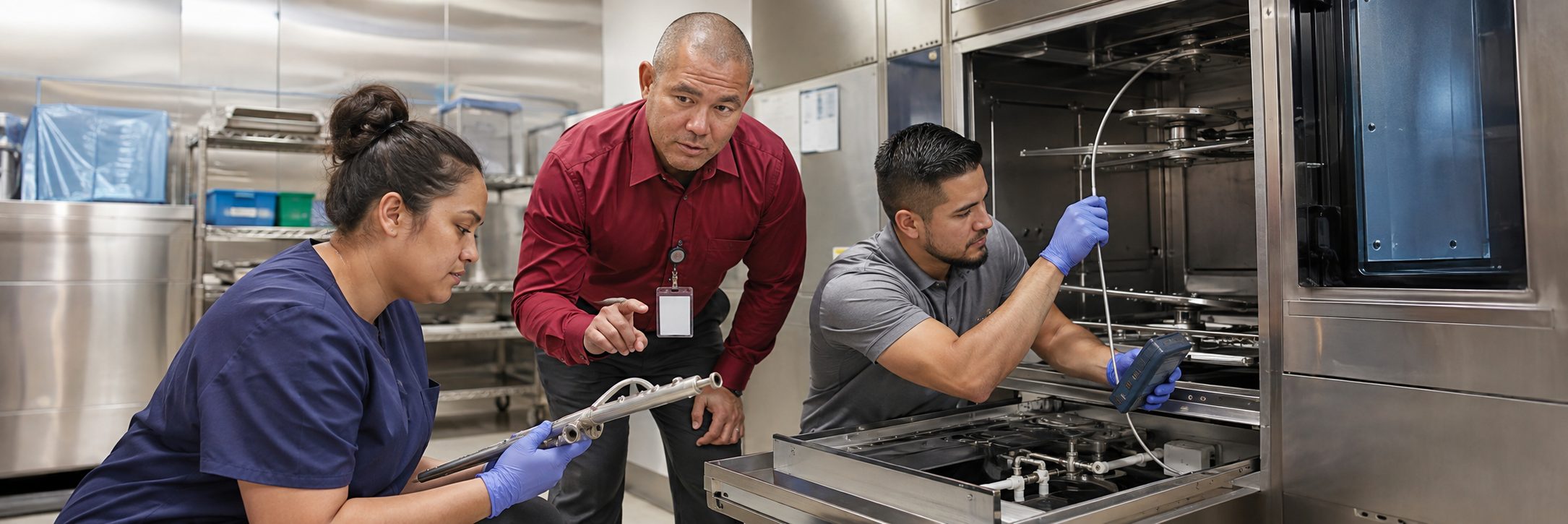
For smaller and remote Washington sites, the challenge is rarely the standard itself but the operational reality of staffing intermittent coverage across ferry schedules and mountain passes. A readiness program that batches inspections into scheduled routes, pre-stages parts, and maintains an audit-ready equipment inventory tends to hold up under survey far better than reactive, ad-hoc service — and it does so without a dedicated on-site biomed department. Nothing here is legal or accreditation advice; specific requirements should be confirmed against your facility's current accreditation manual and CMS interpretive guidance.
Sources: The Joint Commission — Environment of Care; CMS — Conditions of Participation